
Digital Transformation in Manufacturing: How Industry 4.0 Is Creating New Engineering Roles
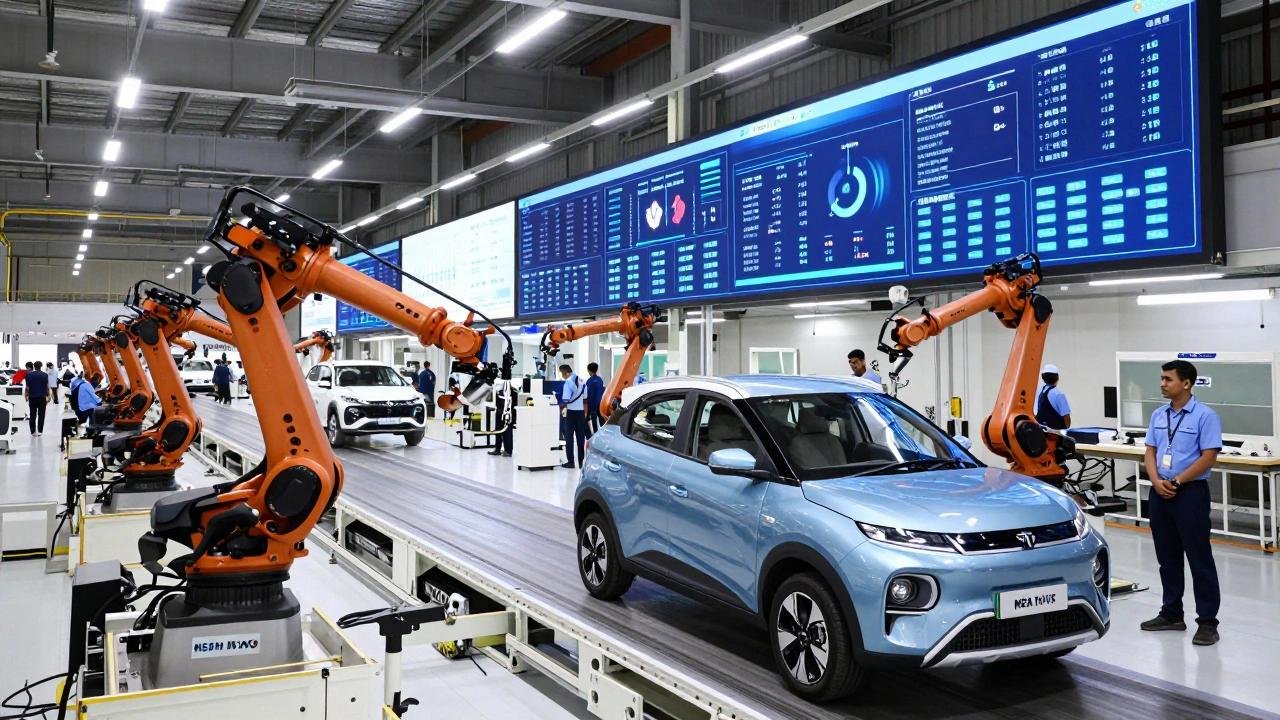
Manufacturing is no longer just about machines, assembly lines and production targets. Across modern factories, sensors collect real-time data, robots automate repetitive operations, and connected systems help engineers monitor quality, reduce downtime and improve productivity.
This shift, known as Industry 4.0, is changing the skills manufacturing employers need. For engineering students, fresh graduates and experienced professionals in India, it creates opportunities in industrial automation, the Internet of Things (IoT), embedded systems, data analytics and automotive manufacturing technologies.
If you are planning your next career move, understanding these changes can help you identify the right skills and engineering roles to pursue.
What Is Industry 4.0 in Manufacturing?
Industry 4.0 refers to the integration of digital technologies with manufacturing operations. It connects machines, software, sensors and production data to improve how factories operate.India's manufacturing sector is exploring advanced technologies such as robotics, artificial intelligence, digital twins and industrial automation. A 2025 roadmap from NITI Aayog identified these technologies as important enablers of advanced manufacturing in India. Source: Press Information Bureau.
In practical terms, a factory can use connected sensors to detect abnormal machine temperatures, analyse production data to identify defects and automate repetitive assembly operations. Engineers then use this information to make better maintenance, quality and production decisions.
Industry 4.0 is not simply about replacing people with machines. It also requires professionals who can design, integrate, maintain and improve these systems.
Top Industry 4.0 Technologies Creating Engineering Opportunities
1. Industrial Automation and Robotics
Industrial automation uses programmable systems, controllers and machinery to manage manufacturing processes. Robots may perform welding, material handling, painting, inspection and repetitive assembly tasks.Engineers working in this field need to understand programmable logic controllers (PLCs), supervisory control and data acquisition (SCADA), sensors, actuators and industrial communication protocols.
Potential job roles:
- Automation Engineer
- PLC and SCADA Engineer
- Robotics Engineer
- Controls Engineer
- Industrial Maintenance Engineer
A useful portfolio project is a simulated conveyor system with sensor-based object detection, automated sorting and a basic monitoring dashboard.
2. Industrial IoT and Smart Manufacturing
The Industrial Internet of Things (IIoT) connects machines, sensors and industrial systems so that operational data can be collected and analysed.For example, vibration and temperature sensors can help identify equipment operating outside normal conditions. Maintenance teams can investigate problems before they cause major production interruptions.
Professionals in this area may work on sensor integration, industrial gateways, data collection, edge computing and machine monitoring.
Potential job roles: Industrial IoT Engineer, IoT Solutions Engineer, Smart Manufacturing Engineer and Predictive Maintenance Engineer.
Skills to learn: Embedded programming, sensor interfaces, MQTT, networking, Python and time-series data analysis. Security is important too. Connected industrial devices must be designed and managed with appropriate access controls, secure configurations and network protections. The US National Institute of Standards and Technology provides guidance on foundational cybersecurity activities for IoT product manufacturers
3. Embedded Systems Engineering
Embedded systems combine hardware and software to perform specific functions inside products and industrial equipment. Examples include automotive electronic control units, motor controllers, sensor modules and machine monitoring devices.As factories adopt connected machinery and manufacturers develop more electronically controlled products, embedded expertise can be useful across automotive, electronics and industrial equipment sectors.
Potential job roles: Embedded Software Engineer, Firmware Engineer, Hardware Integration Engineer and Automotive Electronics Engineer.
Skills to learn: C and C++, microcontrollers, electronics fundamentals, communication protocols such as CAN and SPI, debugging and real-time operating systems.
Beginners can start with a microcontroller development board, connect sensors and write firmware that measures data and communicates with a monitoring application.
4. BIW Manufacturing and Automotive Engineering
Body-in-White (BIW) refers to the vehicle body structure assembled before painting and the installation of many other components. It is an important area of automotive engineering involving sheet-metal structures, joining processes, dimensional accuracy and assembly quality.Modern BIW programmes combine mechanical design, manufacturing engineering, automation, robotics and quality measurement.
Potential job roles:
- BIW Design Engineer
- Manufacturing Process Engineer
- Dimensional Management Engineer
- Automotive Robotics Engineer
- Quality and Metrology Engineer
A current example of these requirements can be seen in Tata Elxsi's Dimensional Management Engineer role, which highlights BIW knowledge, tolerance simulation, measurement systems and collaboration across automotive engineering teams.
Candidates interested in automotive manufacturing should also understand how CAD design connects with tooling, assembly, inspection and production validation.
5. Data Analytics and Digital Twins
Smart factories generate large amounts of production, quality, maintenance and energy data. Business intelligence (BI) tools help teams turn this information into actionable insights.Digital twins take this further by creating digital representations of physical assets or processes. Depending on the implementation, they can support monitoring, simulation and analysis.
Potential job roles: Manufacturing Data Analyst, Industrial Data Engineer, Digital Twin Engineer and Manufacturing Systems Analyst. Skills to learn: SQL, Excel, Power BI, Python, statistical analysis and manufacturing performance metrics such as downtime, throughput and defect rates.
For a portfolio project, build a dashboard that analyses production output, machine downtime and defect trends using sample manufacturing data.
How Engineering Students and Professionals Can Prepare
You do not need to master every Industry 4.0 technology. Choose a path that matches your education and interests.Mechanical engineers: Focus on manufacturing processes, CAD, BIW, robotics or production systems.
Electrical and electronics engineers: Explore PLCs, control systems, sensors, automation and embedded hardware. Computer and IT graduates: Consider industrial IoT, embedded software, manufacturing analytics and industrial data systems.
Experienced production professionals: Build on existing manufacturing knowledge with automation, analytics and digital process improvement.
Start with one practical project, document what you built and explain the problem it solves. Employers value the ability to connect technical knowledge with real production needs.